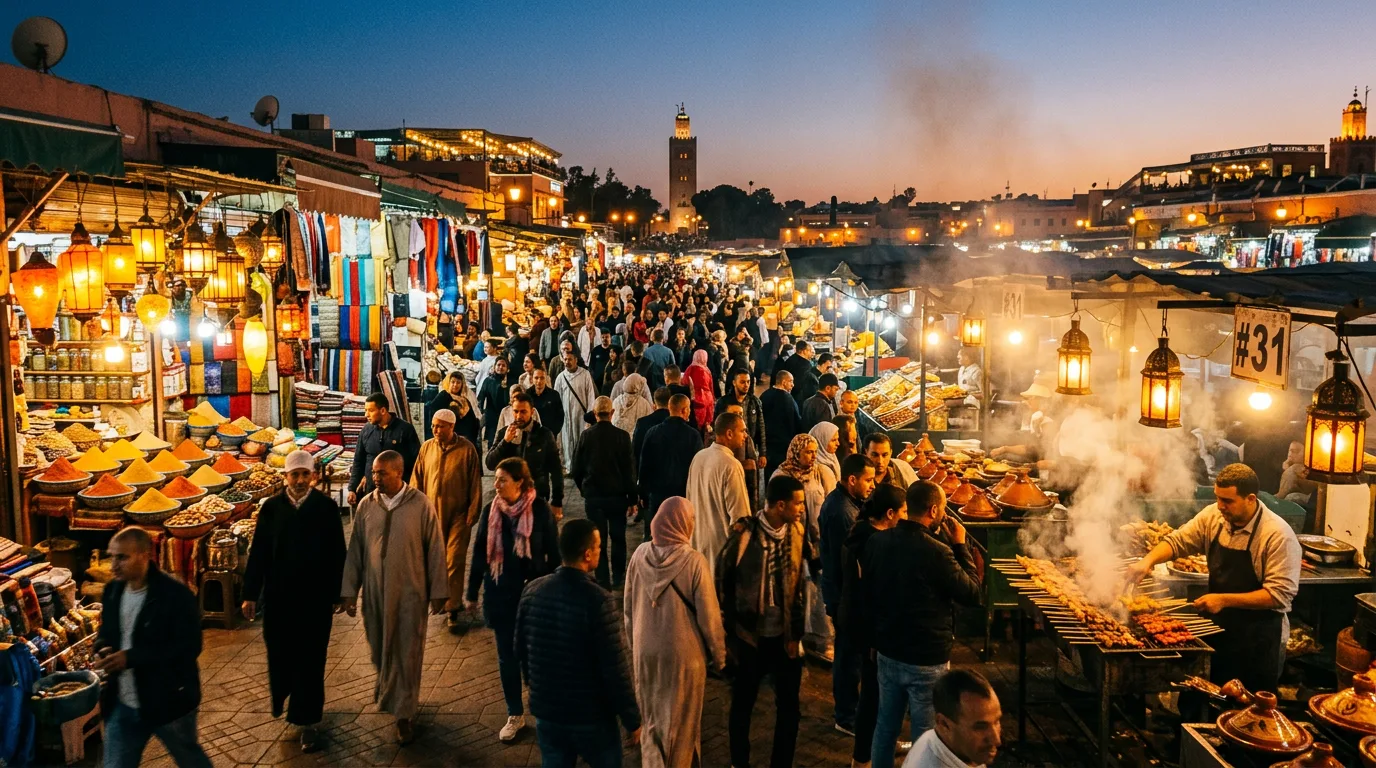
Spring (March–May) and autumn (September–November) are the best all-round windows for Morocco, and especially for the southern desert circuit around Ouarzazate — warm days over the kasbah road, cool nights in the Drâa and Dadès valleys, and dune light at its richest before the summer furnace arrives.
Season by season
Viewed from Ouarzazate — the 'door of the desert' where the High Atlas meets the Saharan south — Morocco's calendar matters more than in any coastal town. The Tizi n'Tichka road down from Marrakech, the pisé towers of Aït Ben Haddou, the Fint Oasis and the long run down the Drâa each read completely differently in March than in July, and no single month flatters every region at once.
- Spring (Mar–May): the sweet spot — wildflowers in the Atlas, warm cities, comfortable desert.
- Summer (Jun–Aug): hot inland (Marrakech and the south can top 40°C); head for Essaouira, Agadir and the mountains.
- Autumn (Sep–Nov): a second peak — stable weather, warm sea, golden desert light.
- Winter (Dec–Feb): mild, sunny cities and prime Sahara season; snow on the Atlas peaks and cold desert nights.
Best time by region
For the Sahara (Merzouga, Erg Chigaga), October to April is the window — summer daytime heat makes the dunes punishing and many camps close. For trekking the High Atlas and summiting Toubkal, April to October is ideal, with winter reserved for those with crampons and a guide.
The Atlantic coast — Essaouira, Oualidia, Agadir — is pleasant most of the year but always breezy; July and August are best for the beach. The imperial cities (Marrakech, Fes, Meknes, Rabat) are most comfortable in spring and autumn.
Things that move the dates
Ramadan shifts each year (it falls in the late-January-to-March window through the late 2020s) and changes the rhythm of the day — desert camps, kasbah guesthouses and driver-guides run normally, but rural eateries on the kasbah road adjust their hours. In the south specifically, the Kelaât M'Gouna Rose Festival in the Dadès Valley (early-to-mid May) and the snow that can briefly close the Tizi n'Tichka pass in January are the two dates that most affect a Ouarzazate-based trip; plan around both.
Frequently asked
What is the cheapest time to visit Morocco?
Low season is the deep summer (July–August) inland and mid-winter outside the holidays. You'll find the best riad and tour rates in June and November, just outside the two peaks.
When is it too hot in Morocco?
July and August inland — Marrakech, Fes and the Sahara routinely exceed 38–45°C. If you travel then, base yourself on the coast or in the mountains and save the desert for a future trip.
Is December a good time to visit Morocco?
Yes for the cities and the desert — sunny, mild days and few crowds — but pack warm layers: desert nights and Atlas evenings are cold, and the high peaks hold snow.
Planning a trip?
Let a Marrakech atelier handle the details.
Tell us your dates and style and we'll send a written itinerary and a transparent quote within 24 hours.
Request an itineraryKeep reading
Practical
What to Pack for Morocco
Pack light, modest and layered. A southern trip swings from a hot Ouarzazate afternoon to a cold night on the Erg Chebbi dunes and a chilly dawn over the Tizi n'Tichka in a single day, so breathable layers, broken-in walking shoes and one genuinely warm top cover almost everything.
Planning
Is Morocco Safe to Visit?
Yes — Morocco is one of the safest and most welcoming countries in North Africa for travellers, and the southern desert region around Ouarzazate is calmer still: small kasbah towns, low crime and a film-industry economy used to outsiders. The few day-to-day frictions are petty scams in the bigger-city souks, easily sidestepped.
Planning
Morocco Travel Costs & Budget
Morocco can be done on almost any budget. Mid-range travellers spend roughly US$80–150 per person per day; a private southern circuit from Ouarzazate — driver-guide, kasbah stays and a desert-camp night — typically runs US$200–400+ per day depending on season and the standard of camp you choose.