The south around Ouarzazate is a photographer's country in a way that very few regions match. It packs a density of compelling subjects — desert, earthen architecture, dramatic gorges, craft, portraiture, extraordinary light — into a geography you can cover in a week. What it rewards is timing, knowledge, and a degree of cultural sensitivity. This is our guide, written from years of taking guests and photographers to the locations that matter.
Aït Ben Haddou — the ksar at dawn and dusk
Aït Ben Haddou is the region's defining photographic subject. The classic shot is the ksar of stacked earthen towers reflected in the river, best in the soft light just after sunrise — before the buses arrive — or as it glows gold at sunset. For an elevated angle, climb to the ruined granary at the summit for the view over the palmery and the riverbed below.
Within the ksar, the lanes and the textured mud-brick walls reward a wide-angle, while a telephoto isolates the towers against the Atlas. Cross the river on the stepping-stones for the head-on view, and shoot from the new town side at golden hour for the postcard frame. A 24–70mm covers most of it; a wide-angle helps in the narrow lanes.
The desert — dunes at first and last light
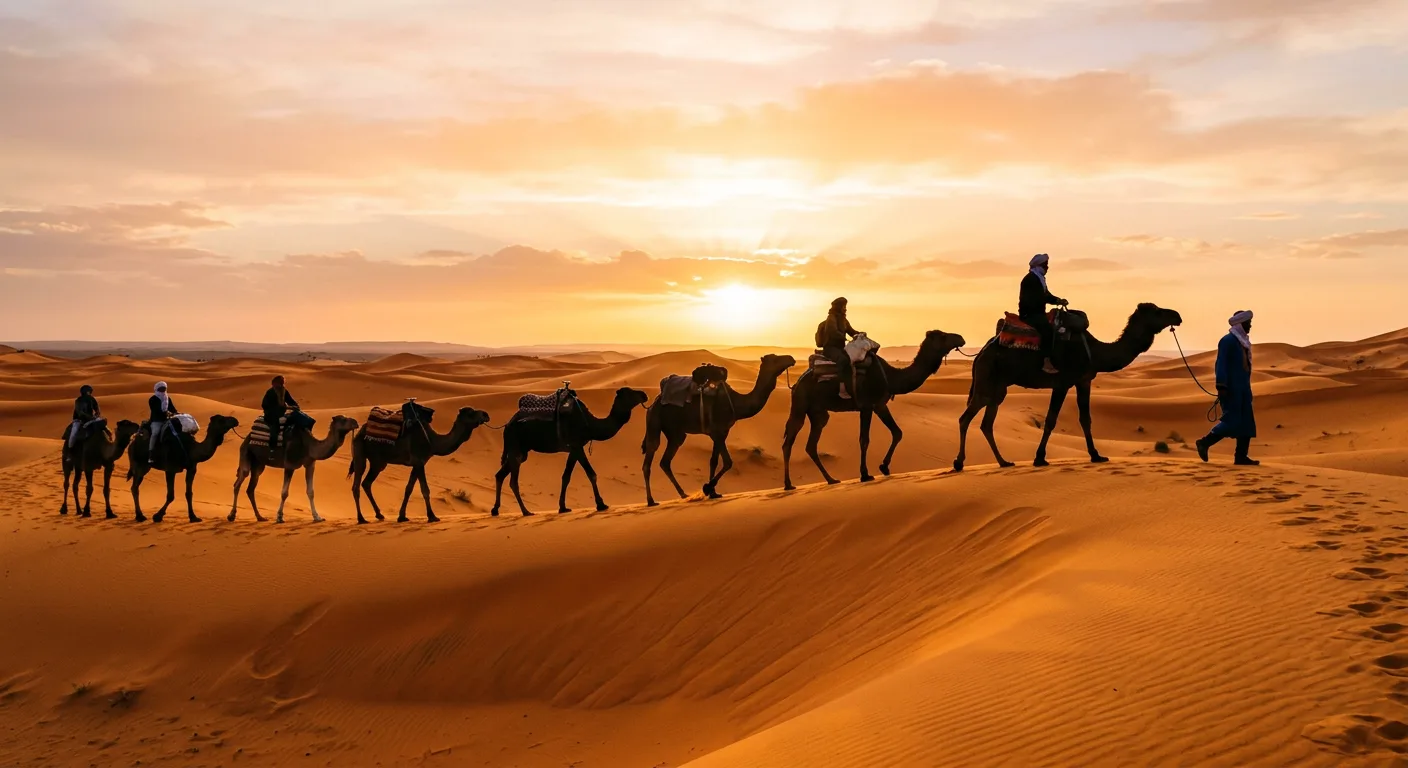
The Sahara south of Ouarzazate is the most dramatic landscape in the region. The rippled dunes turn from gold to deep crimson across a sunset. The photography logic is simple: stay overnight in a camp near Zagora or Merzouga, ride or drive out in the late afternoon, and be positioned on a dune for the last light — then again at dawn, when the sun rakes low across the sand and the shadows are longest.
A 24–70mm captures the broad dune fields; a 70–200mm isolates a single crest or a camel train against the sand. After dark, the desert offers some of the clearest night skies anywhere — bring a tripod and a fast wide-angle for the Milky Way arching over the dunes.
The kasbahs and the film studios
The kasbah trail is a gift for the architecture photographer. The Taourirt Kasbah in Ouarzazate, with its warren of towers, is most striking in the low, raking light of early morning or late afternoon. Atlas Film Studios is a playground of standing sets — Egyptian temples, a Tibetan monastery, Roman walls — under reliable sun. The restored Kasbah Amridil in Skoura, framed by date palms, is another fine subject at golden hour.
Permission to photograph at the kasbahs and the studios is straightforward; a small fee or tip is expected at a few private interiors.
Skoura and the oases
Skoura, the oasis of kasbahs, is the place for green-and-earth contrasts and detail photography. The light filtering through the date palms onto the irrigation channels rewards an early or late visit, while the kasbahs half-hidden among the trees make atmospheric subjects. Best of all are the weaving and argan cooperatives, where close shots of hands at the loom make wonderful images — ask first.
For a fuller treatment of the oasis, see our dedicated Skoura guide.
The Tizi n'Tichka, the Dadès and the Todra
The mountain roads are landscape corridors. The Tizi n'Tichka offers sweeping Atlas vistas and snow-dusted peaks in winter, best in the morning light. The serpentine switchbacks of the Dadès Gorge are a superb wide-angle subject in the afternoon, and the sheer 300 m walls of the Todra Gorge reward a careful frame when the light slips down between them.
Further out, the Draa Valley unspools a near-continuous ribbon of palms and kasbahs — a landscape photographer's road, especially from the viewpoints at dawn. A 24mm wide-angle captures the scale; a telephoto picks out the ridgelines and the play of light on the rock.
Photographing people: how to do it well and respectfully
Some of the south's most compelling images involve people — desert guides, weavers, market traders, shepherds in the hills. The rules are straightforward but worth stating explicitly:
- Always ask before photographing someone at close range. A gesture and eye contact communicates the question. Respect a refusal without negotiation or payment pressure.
- Engaging with a craftsperson's work — asking about the process, buying something — almost always produces a natural willingness to be photographed.
- Street photography at medium distance (70–135mm) is standard and generally accepted. Pointing a wide-angle into someone's face is not.
- Show people their image on the camera screen. The reaction is almost always positive and often opens a longer conversation.
- Some posed shots — a man with a camel, a costumed figure at a site — may come with the expectation of a small tip. This is understood and fair; agree it first.
Our local guides can arrange workshop visits with craftspeople who have agreed to photography in advance — the difference in image quality from a relaxed, consenting subject is enormous. See our private guide services and photography-focused tours.
Frequently asked
What is the most photogenic place around Ouarzazate?
Aït Ben Haddou and the desert top most lists. The earthen towers of the ksar glowing at sunrise or sunset, reflected in the river, are the region's signature image, while the dunes of the Sahara are extraordinary at first and last light. For drama, the switchbacks of the Dadès Gorge and the sheer walls of the Todra are unmatched.
What is the best time of year to photograph the south?
October–November and March–April give the most consistent quality light — warm, directional and free of summer haze. Spring greens the oases; winter brings exceptional clarity and the chance of snow on the High Atlas behind the kasbahs. Summer light is harsh between 10am and 4pm, so shoot the golden hours and shelter at midday.
Is it acceptable to photograph people in the south?
Always ask first for close-up portraits. Many people, particularly in rural Amazigh communities and older generations, prefer not to be photographed without consent. A gesture and a questioning look usually communicates the request; respect a refusal without negotiation. Photographing guides, camp hosts or craftspeople you have engaged with is generally welcomed.
What camera gear should I bring to southern Morocco?
A versatile 24–70mm or 24–105mm covers most situations. A wide-angle (16–24mm) is excellent for the kasbahs, the gorges and the dunes. A telephoto (70–200mm) compresses the desert and the Atlas beautifully and allows respectful distance for candid shots. A polariser helps in the bright desert light, and a small torch is useful for a dawn dune climb.
Can you photograph inside the kasbahs and film sets?
Photography is generally fine at the kasbahs, Aït Ben Haddou and the film studios — the studios are a photographer's playground of standing sets. At a few private kasbah interiors a small fee or a tip is expected. In mosques (non-Muslims usually cannot enter) and at any active religious site, be respectful and follow posted rules; exterior shots are always fine.
Where are the best places to photograph southern craftspeople?
The weaving cooperatives and argan women's collectives are the most rewarding — hands at the loom or cracking argan nuts make superb close-ups. In a desert camp, hosts preparing tea or bread by the fire give atmospheric portraits. Ask your guide to arrange a workshop visit; a relaxed, consenting subject who has agreed in advance gives far better photographs.
Photography itineraries
We build trips around the light, not the tourist schedule.
Dawn at Aït Ben Haddou, sunset on the dunes, the studios under clear sun, cooperative access in Skoura — tell us your priorities and we design around them.
Request an itinerary