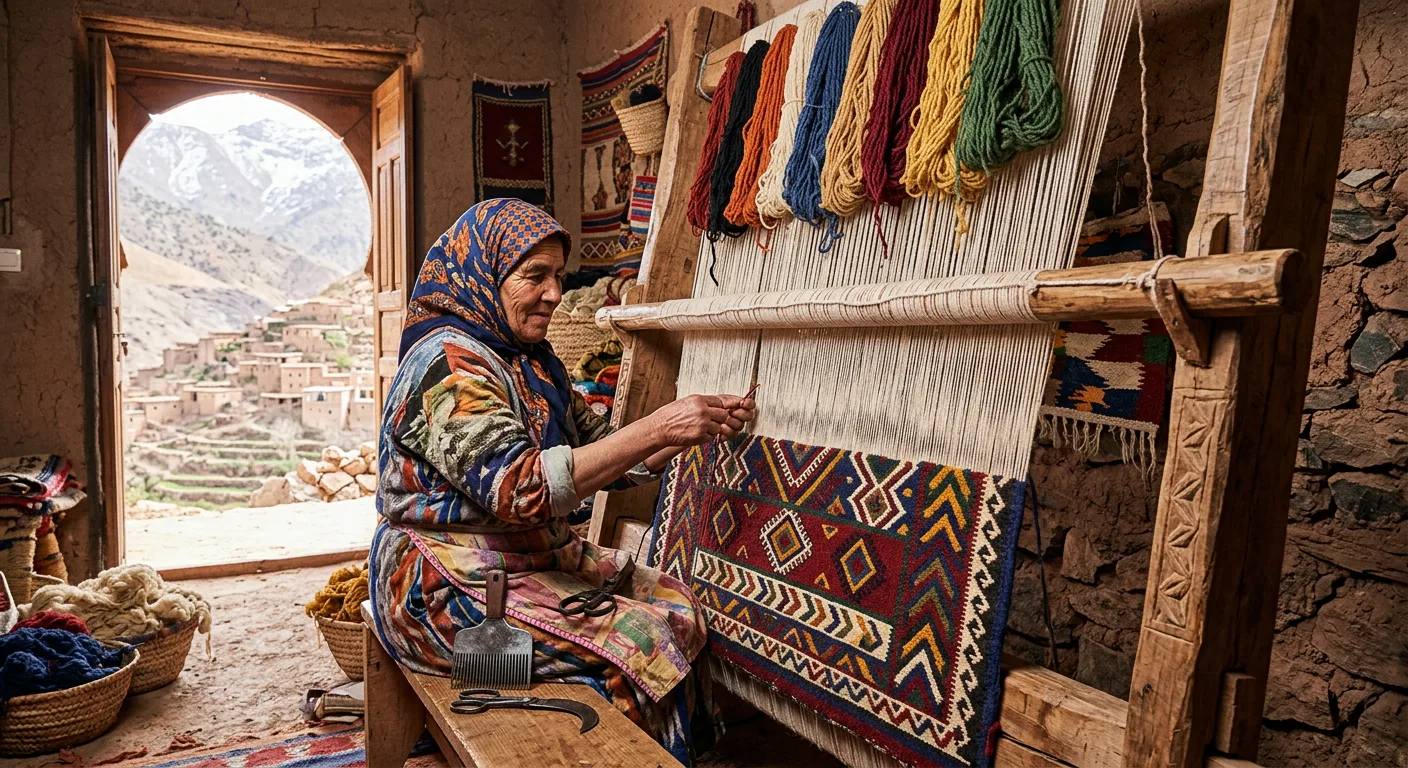
The south is not the frantic bazaar of the imperial cities, and that is part of its charm. The best shopping here is in craft studios and cooperatives — a weaving collective in a Berber village, a women's argan-oil cooperative on the road west, a rosewater distillery in the Valley of the Roses — where you can watch the work being made and buy direct from the maker. Knowing where to look turns souvenir-hunting into a window onto how the south actually lives and creates.
What are the best things to buy around Ouarzazate?
The quality purchases are tied to genuine southern craft traditions. Berber rugs and kilims — hand-knotted or flat-woven by village women, each with its own pattern language — are the standout buy; a good small rug runs anywhere from US$60 upward depending on size and knot density. Argan oil and amlou from the women's cooperatives are inexpensive, genuinely local, and far better than the roadside bottles. Saffron from nearby Taliouine, fossils and minerals, silver and beadwork, leather goods and rosewater from the Valley of the Roses are all characterful. For the kitchen, take home Draa Valley dates and southern spice blends like ras el hanout.
Items to approach with caution: "ancient" fossils and "Berber antique" silver sold around Aït Ben Haddou, which are often modern reproductions or resin; unlabelled "pure argan" of unknown provenance; and mass-produced trinkets dressed up as handmade. The surest way to buy well is to purchase from a cooperative or watch something being made before you pay.
Where should you shop for each craft?
Ouarzazate town and Aït Ben Haddou are the obvious markets: rug shops, fossil and mineral stalls and souvenir shops cluster near the kasbahs. The women's argan and amlou cooperatives on the road toward Taroudant let you watch the nuts cracked and the oil pressed, and buy direct. Taliouine, west of Ouarzazate, is Morocco's saffron capital. The Valley of the Roses around Kelaa M'Gouna sells rosewater and rose products distilled on site, and the Draa Valley is the place for dates. For weaving, the village collectives around Skoura and the gorges sell beautifully made pieces and support rural communities directly.
How does bargaining actually work in the south?
Bargaining at the southern stalls is part of the exchange, but gentler than in the big cities. At rug and souvenir shops the first price has plenty of give; cooperatives and everyday shops are essentially fixed-price. A few principles we tell every guest:
- Where bargaining applies, counter at around 40–60% of the opening price and settle somewhere in between.
- Don't reveal your budget; let the seller make the first moves.
- Smile and stay warm. Southern shopping is sociable, not adversarial.
- Walking away calmly often brings a final discount, since opening prices are inflated.
- Once a price is agreed, honour it. Changing your mind after acceptance is considered rude.
- Craft cooperatives sell at fair fixed prices — a useful reference point for value, even if you don't buy there.
How do you ship large purchases home?
Reputable rug and antique dealers can arrange international freight. A rolled rug shipped to London or New York typically costs US$120–350 and arrives within two to four weeks. Always ask for a detailed receipt listing the item, dimensions, material and agreed price, and photograph it. For genuinely antique items, Moroccan export rules apply — reputable dealers know the process and the paperwork.
For smaller items, DHL, FedEx and Aramex have offices in the larger towns and will accept packages at the counter. The national post is inexpensive but slow and best reserved for non-fragile textiles.
What should you know about rugs?
The south's weaving tradition is the real thing — the Aït Ouaouzguite and other Berber groups around Ouarzazate have woven for generations, and each region has its own motifs and dyes. The best pieces are hand-knotted or tightly flat-woven in real wool (not synthetic), with even tension and natural or vegetable dyes. Turn a rug over to check the knotting and ask where and by whom it was made; a cooperative that lets you meet the weavers is one to trust. Avoid the loud, chemically dyed "Berber" rugs churned out for the tour-bus trade. The women's cooperatives are a particularly good place to buy, both for quality and for the livelihoods they support.
How do you shop with a guide?
A knowledgeable local guide changes the experience entirely. We take our guests to the working studios — a weaver at a floor loom in a Berber village, a women's argan cooperative, a saffron grower in Taliouine — where you buy direct, at fair prices, and understand what you are buying. Our private guides are licensed and independent — they receive no commission from any shop, which means they take you where the quality is, not where the margin is. See our southern Morocco destination guides for the broader picture, or browse our private tours that include a curated crafts morning.
Frequently asked
What are the best things to buy around Ouarzazate?
Hand-woven Berber rugs and kilims, argan oil and amlou from women's cooperatives, saffron from nearby Taliouine, fossils and minerals from the desert escarpments, silver and amber-style beadwork, leather goods, dates from the Draa Valley and rosewater from the Valley of the Roses are the standout buys. Many are made by cooperatives, so your money supports the makers directly.
Is bargaining expected in the southern souks?
Yes, for crafts and souvenirs, though more gently than in Marrakech. At the rug and souvenir stalls around Ouarzazate and Aït Ben Haddou a polite negotiation is normal — expect to settle well below the first asking price on tourist goods. Cooperatives, the supermarket and most everyday shops are fixed-price, and pushing too hard on a cooperative is considered impolite.
How do I avoid buying low-quality goods?
Buy from craft cooperatives and workshops where you can watch the work — weaving collectives, the argan-oil women's cooperatives, the rosewater distilleries. For 'Berber silver', 'amber' and 'genuine fossils', be sceptical: much sold to tourists is reproduction or resin. For argan oil, buy from a labelled cooperative rather than an unmarked roadside bottle.
Can I ship large purchases from Morocco back home?
Yes. Larger rug and antique dealers in Ouarzazate and Marrakech can arrange international shipping with freight agents. Expect to pay roughly US$120–350 for a rug shipped to Europe or North America, with delivery in two to four weeks. Always get a receipt listing the item, dimensions and agreed price.
Where is best for which products?
Ouarzazate town and Aït Ben Haddou for rugs, fossils and souvenirs. The women's argan and amlou cooperatives on the road toward Taroudant for oil. Taliouine, west of Ouarzazate, for saffron. The Valley of the Roses (Kelaa M'Gouna) for rosewater. The Draa Valley for dates. Skoura and the gorges have small craft stalls worth a look.
Do shops accept credit cards?
Larger shops, hotels and some cooperatives in Ouarzazate accept Visa and Mastercard, sometimes with a small surcharge. Small stalls and rural sellers are cash-only. Carry Moroccan dirhams (MAD) for souks and stalls; ATMs are available in Ouarzazate and the larger towns but scarce in the deep countryside, so withdraw before heading out.
Shop smarter
Let a commission-free guide lead the way.
Our local specialists take you to the craftspeople and cooperatives, not the tourist shops — and never earn a cut from what you buy.
Request an itinerary