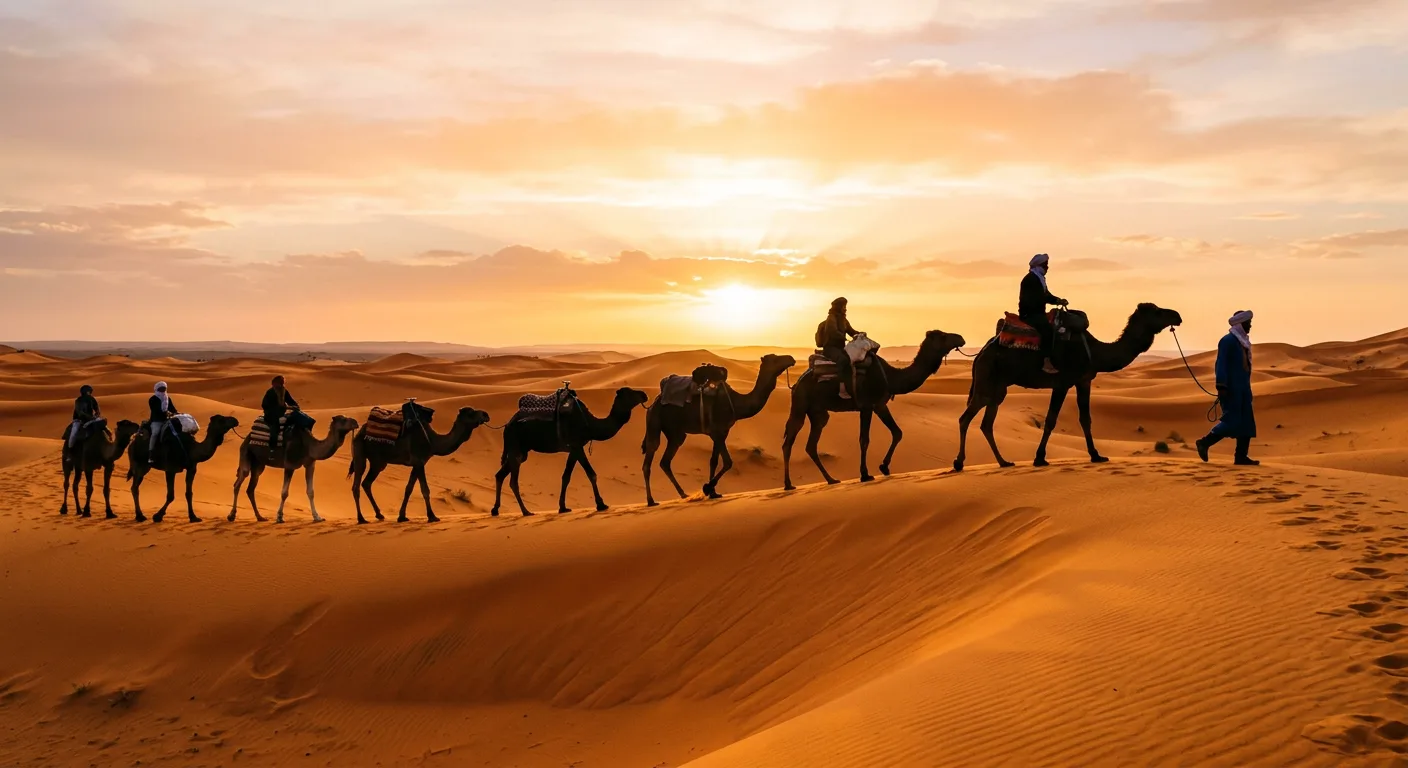
A night in the Moroccan Sahara is one of the experiences people describe for decades afterwards. The dunes of Erg Chebbi turning crimson at sunset, the silence after midnight, a sky so unpolluted you can pick out the Milky Way with the naked eye — it is no accident that caravan routes and a dozen films chose these golden sand seas near Merzouga and M'hamid. But "desert camp" now covers a spectrum from a goat-hair Berber tent to a transparent dome with a king bed and private bathroom. This guide explains the differences honestly, so you can choose without surprises.
Traditional Berber camps vs luxury bubble camps
The Moroccan Sahara is run largely by the local Berber and nomad families of the Tafilalt and Draa, and every camp sits inside the same extraordinary landscape. Traditional Berber camps use black goat-hair tents (khaima) pitched between the dunes, with simple beds, shared bathroom blocks and a communal tent around a central fire. The atmosphere is genuine, the value is good, and dinner is usually a tagine cooked slowly over charcoal.
Luxury bubble camps — the transparent domes you have seen photographed — offer freestanding pods with proper beds, private en-suite bathrooms and a see-through ceiling so you can fall asleep watching the stars. They are pricier and a little less rustic, but the landscape framed through the dome is unforgettable. We route clients who want immersion and economy to Berber camps, and those who want comfort and stargazing-from-bed to the dome camps. Browse our Sahara destination pages for more context on both.
Standard Berber camps
Standard camps — the majority across the erg — use large goat-hair or canvas tents with simple bed frames, basic cotton bedding and a shared toilet and shower block for every few tents. Dinner is a communal tagine or mezze served in a central tent. Price range: US$40–80 per person including dinner, breakfast and a sunset 4×4 dune tour.
The experience is genuine and often memorable, but the variables are high — tent condition, food quality and plumbing reliability vary considerably between operators. If you book independently, read reviews from the last three months. If you book through us, we have inspected every camp we recommend.
Luxury and bubble camps
Luxury camps have transformed the Moroccan Sahara over the past decade. The best now offer freestanding private domes or suites of 25–40 m² with proper king-size beds, en-suite bathrooms with hot showers and flush toilets, climate control and a transparent ceiling panel for night-sky viewing. Décor ranges from Berber minimalism to full safari-lodge polish dropped into the dunes.
Dinner at a good luxury camp is a proper multi-course meal — mezze, a slow-cooked méchoui lamb, Moroccan pastries — served at a set table rather than from a central buffet, often with live Gnaoua or Berber music after dark. Price range: US$150–500+ per person, depending on the camp, season and level of exclusivity. The most remote dome camps position themselves as all-inclusive desert lodges and price accordingly.
What a night actually includes
For any reputable camp, standard inclusions are:
- 4×4 transfer from the edge of the dunes to the camp — Berber pickup, usually 20–40 minutes; camel arrival is an option for the final stretch.
- Sunset 4×4 dune tour — the main sights (the highest crests, the nomad wells, the rolling sand seas) followed by sunset from a dune crest or ridge.
- Dinner — communal or private depending on camp tier, often a tagine.
- Accommodation — the tent or dome itself; quality varies significantly.
- Breakfast — bread, msemen, amlou, eggs, olives, coffee and tea.
- Morning 4×4 or camel return to the edge of the dunes.
Not always included: alcoholic beverages (Morocco is Muslim but most luxury camps serve wine and beer on request), sandboarding rental, camel treks beyond the included leg (usually charged separately), guided dune walks, and laundry.
Drive times and getting there
Ouarzazate to Merzouga (Erg Chebbi): approximately 360 km via the Draa and Tafilalt, about five hours. Many guests break the run at Zagora or the Todra Gorge, turning the drive into part of the itinerary rather than an endurance exercise.
Ouarzazate to M'hamid (Erg Chigaga): approximately 160 km, 3 hours down the Draa Valley — then a 4×4 run out to the deeper, wilder dunes that see far fewer visitors.
Marrakech to the Sahara: a longer haul over the Tizi n'Tichka pass to Ouarzazate first, so most itineraries treat Ouarzazate as the gateway and stage the desert from there. See our Sahara tours for multi-day route options.
When to go and what to pack
The prime windows are March–May and September–November. December and January are cold (lows near 5 °C or below) but offer extraordinary solitude and the clearest stargazing. June through August are punishing — 40 °C+ in the afternoon, though the nights are pleasant.
Essential packing regardless of season: a mid-weight fleece or down layer for evenings, a headtorch, sunscreen, lip balm (the air is very dry), a cheche or scarf for sand and sun, and a power bank (many camps have limited charging). Sand gets into everything — protect camera gear in a sealed bag.
Frequently asked
What is the difference between a Berber camp and a luxury bubble camp in the Moroccan Sahara?
Traditional Berber camps use goat-hair tents (khaima) clustered between the dunes, with shared bathroom blocks and a communal fire — atmospheric and good value. Luxury 'desert dome' or bubble camps offer freestanding pods with private en-suites, proper beds and transparent ceilings for stargazing from your pillow. Both sit deep in the erg; the difference is comfort, privacy and price, not the landscape outside the door.
How long does it take to drive from Ouarzazate to the Sahara dunes?
From Ouarzazate it is roughly 360 km (about five hours) east to Merzouga and the great dunes of Erg Chebbi, or about 160 km (three hours) south to M'hamid, the launch point for Erg Chigaga. Most travellers reach the edge of the dunes, transfer into a Berber 4×4, and ride 20–40 minutes across the sand to their camp. Many combine the Sahara with the Draa Valley and Zagora on the way down.
What is typically included in a Sahara camp night?
A well-run camp includes a tent or dome with beds and bedding (not roll mats), shared or en-suite bathrooms depending on tier, dinner (often a tagine slow-cooked over charcoal, or a medfouna — the 'Berber pizza' of Merzouga), breakfast, a sunset 4×4 dune tour, and a fire with sweet Berber mint tea. Better camps add stargazing, camel rides and guided walks up the highest dune crests.
Is it cold in the Sahara at night?
Yes — more so than most guests expect. Desert temperatures swing sharply between day and night. In spring and autumn, overnight lows can drop to 5–10 °C. December through February can see frost and bitterly cold nights out on the dunes. June through August nights are warm (20–25 °C) but afternoon highs of 40 °C+ make midday demanding. We always advise guests to pack a fleece regardless of the month.
When is the best time to visit the Moroccan Sahara?
March through May and September through November are the prime windows — days are pleasantly warm (22–30 °C), nights are cool but not freezing, and the light on the dunes is extraordinary. December and January are cold but offer the fewest visitors and the clearest skies for stargazing. Avoid July and August unless you are specifically prepared for extreme heat.
Do you need a 4×4 to reach the camps?
Yes — vehicles inside the erg are Berber-operated 4×4 pickups, and your camp arranges the transfer from the edge of the dunes. Camel arrival is available as a slower, more romantic option for the final stretch. For mobility considerations the 4×4 transfer is straightforward and comfortable. We arrange the right transfer for each client.
Ready to sleep under the stars?
We select and inspect every camp we recommend.
Your Ouarzazate and Ait Ben Haddou Tours journey to the Sahara is fully private — private vehicle, private driver-guide, and a camp we have personally vetted. No shared groups, no compromises.
Plan a Sahara journey