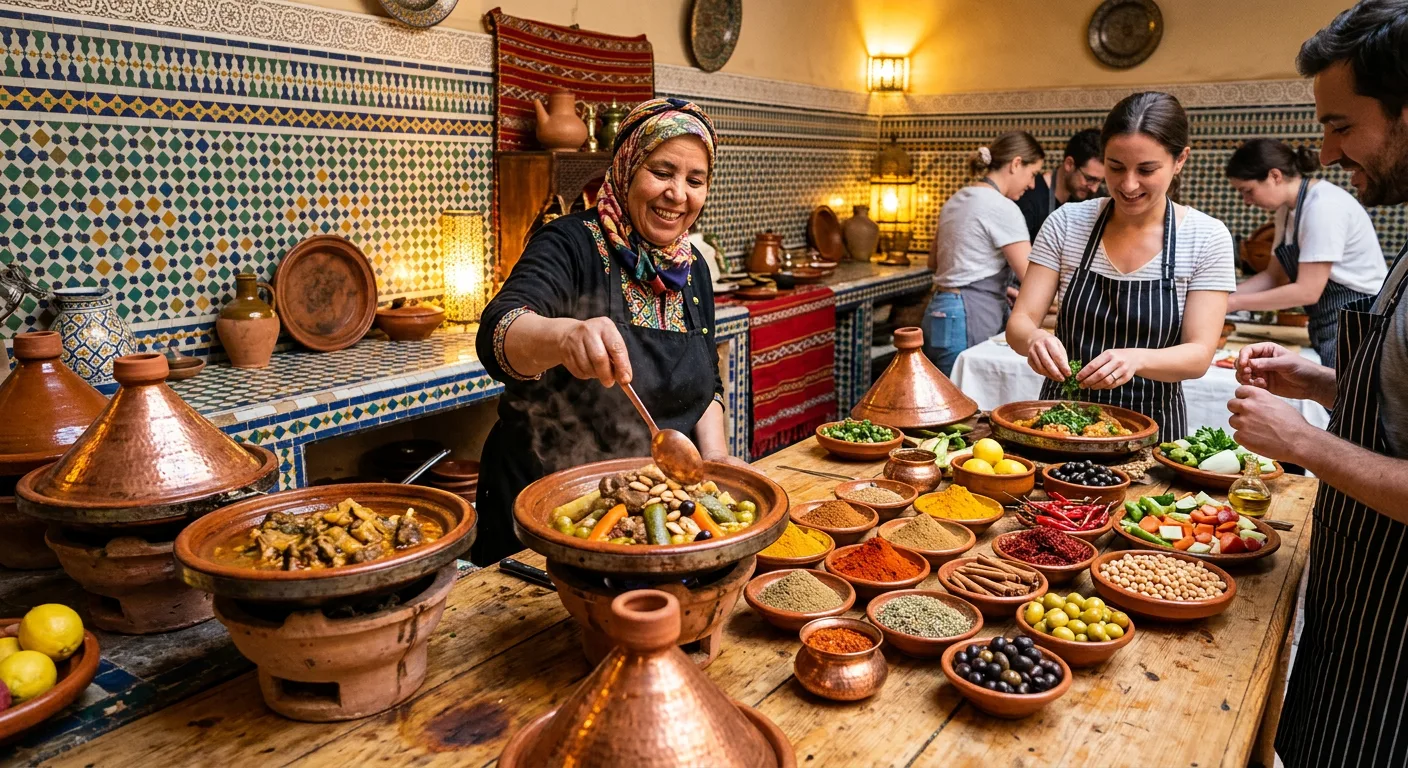
Food in the south is generous, slow and rooted in Amazigh (Berber) tradition. The couscous and tagine you know from abroad are real here — but they sit beside dishes that define southern hospitality: lamb simmered for hours over coals, a Berber omelette bubbling in its clay pot, and bread torn warm from a communal oven. The desert sharpens every flavour. Here is where to begin.
The dishes worth seeking out
Tagine is the dish to try first — meat or vegetables cooked low and slow in the conical clay pot that gives it its name. The southern classics are lamb with prunes and almonds, and chicken with preserved lemon and olives. Cooked properly it is meltingly tender, scented with saffron, ginger and cumin, and meant to be scooped up with bread rather than eaten with a fork.
Couscous — traditionally the Friday dish — is a mound of hand-rolled semolina steamed over a broth of seven vegetables and meat, fluffy and fragrant. And the Berber omelette, eggs cooked into a tomato-and-onion tagine, is the perfect light lunch on the kasbah trail. Look for them at home-style restaurants and guesthouses.
For a special occasion, seek out a mechoui (slow-roast whole lamb) or a tanjia, the slow-braised pot traditionally cooked in the embers of the hammam fire. These are celebration foods, best arranged in advance in a family home or a desert camp. Our guides know exactly where to go.
Grills and snacks in Ouarzazate town
Avenue Mohammed V is the best casual-eating theatre in Ouarzazate. Brochettes (skewers) grilled to order over charcoal, kefta, harira soup and freshly fried msemen are the standards — cheap, fresh and excellent. The turnover is high and the food is cooked in front of you, so choose busy stalls and you will eat well.
A bowl of harira (tomato, lentil and chickpea soup) with bread and dates makes a classic light meal, eaten at a counter. End any wander with a glass of mint tea — it is the local punctuation mark, sweet, hot and endlessly poured.
Kasbah kitchens and the family table
The best sit-down eating around Ouarzazate is in the kasbah hotels and guesthouses — in town, out at Aït Ben Haddou, and in the Skoura oasis. A proper southern spread — salads of zaalouk and taktouka, warm bread, a long-cooked tagine, fruit and tea — arrives unhurried and is meant to be shared. Order generously; this is how the south eats.
For something more intimate, a meal in a Berber family home or a desert camp is the equivalent of the family table: real tagine or couscous cooked by someone who has made these dishes their whole life, often over a wood fire. The quality frequently beats any restaurant. We include home and camp dinners in our private itineraries.
Bread, argan and amlou
Bread is treated with respect in the south — warm khobz and flat batbout accompany nearly every meal, and many families still bake in a communal oven or over the fire. The smell of fresh dough is part of the morning; your guide can take you to a village bakery.
The south is argan country, and the classic breakfast spread is amlou — a paste of roasted almonds, argan oil and honey — scooped up with warm bread. A jar of amlou and a bottle of pure argan oil are among the most evocative edible souvenirs you can carry home; buy from a women's cooperative rather than a roadside stall for quality and to support the makers directly.
Drinks: mint tea, coffee and juice
Sweet green tea with fresh mint (atay) is the rhythm of southern hospitality, poured from a height into small glasses and offered everywhere from a shop to a desert tent. Accepting a glass is a social act; it carries real warmth. Coffee, often spiced, is widely available too.
Fresh orange and pomegranate juice are cheap and excellent in season. Morocco is a Muslim country and alcohol is limited in the south — it is served in some hotels and licensed restaurants but not in casual eateries, so do not expect it everywhere. Read our full Ouarzazate destination guide.
Frequently asked
What is the must-eat dish in Ouarzazate?
A slow-cooked tagine is the dish to try first — lamb with prunes and almonds, or chicken with preserved lemon and olives, simmered for hours in the conical clay pot. In the south you will also meet the Berber omelette (eggs cooked in a tomato-and-onion tagine) and, on special occasions, mechoui or a Berber tanjia. Finish with mint tea and dates.
Is street food safe to eat in Ouarzazate?
Yes — Ouarzazate has a relaxed grill-and-snack scene along Avenue Mohammed V, and the busy brochette (skewer), harira and msemen stalls cook to order with high turnover. The main thing is to choose busy stalls and freshly made food. Grilled brochettes, a bowl of harira soup and fresh-baked khobz are cheap and excellent.
What are the best areas for food around Ouarzazate?
Avenue Mohammed V in town for grills, cafés and tagine restaurants. The kasbah hotels and guesthouses, in town and out at Aït Ben Haddou, often serve the best home-style cooking. Skoura's oasis guesthouses do excellent garden lunches. For a real treat, a meal in a Berber family home or a desert camp is the highlight many travellers remember most.
Are there good vegetarian options around Ouarzazate?
Yes — southern Moroccan cooking is generous to vegetarians. Vegetable tagine, Berber omelette, zaalouk (smoky aubergine), taktouka (pepper and tomato), lentils, couscous with seven vegetables and plenty of bread and olives make a full, satisfying meal with no meat. Just check whether a tagine is cooked with meat stock or smen (aged butter) if you are strict.
What is amlou and is it worth seeking out?
Amlou is a rich southern spread of roasted almonds, argan oil and honey — sometimes called 'Berber Nutella'. It is unique to the argan-growing south and delicious on warm bread at breakfast. You can buy it, along with pure argan oil, from women's cooperatives on the road toward Taroudant; it makes an excellent edible souvenir.
When should you eat in Ouarzazate — are meal hours different from Europe?
Meal times skew a little later than northern Europe. Lunch runs roughly 12.30–3 pm; dinner from around 8 pm, with locals often eating later. Cafés and snack counters serve all day. During Ramadan, many places close until iftar (sunset) and then fill quickly — plan around it and book ahead at the better restaurants.
Eat like you live here
Our private food experiences go beyond restaurants — into homes, cooperatives and the desert.
Ouarzazate & Aït Ben Haddou Tours curates half-day and full-day food experiences for guests who want to understand what they are eating, not just photograph it.
Enquire about a food experience