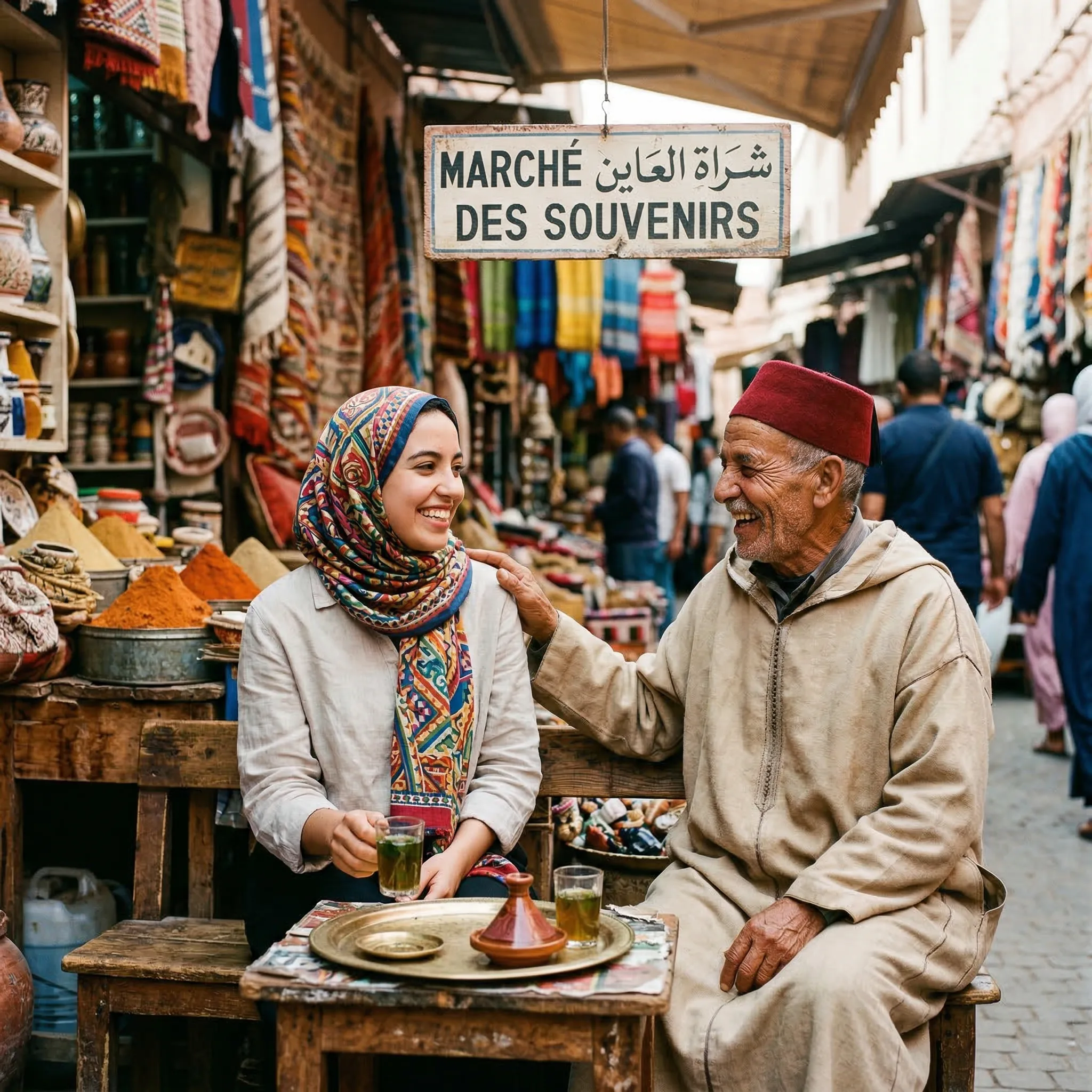
Before any conversation in the south, before any deal, before any meal — there is tea. Atay, the green gunpowder tea brewed with a fistful of fresh spearmint and plenty of sugar, poured from a height into small glasses until a light crown of foam forms on top. It is not simply a drink. It is an act of welcome, and across Berber Morocco a near-sacred matter of honour — sometimes called, with a smile, "Berber whisky".
Where did the ritual come from?
Green tea reached Morocco through trade in the 18th and 19th centuries and was quickly married to the mint and sugar already loved here, becoming woven into a culture where hospitality to the traveller is a foundational virtue. In the desert and the kasbah villages, offering a guest tea was — and remains — a declaration of welcome and safety. The custom is so central that the tea service, with its ornate pot (berrad) and tray, is a prized possession in many homes. The fresh mint and the theatrical pour are the signatures that make the Moroccan version unmistakable.
How is Moroccan mint tea actually made?
The process is deliberate and unhurried. Green gunpowder tea is rinsed with a little hot water to wash off bitterness, then steeped in the berrad with a generous bunch of fresh spearmint and a great deal of sugar — often a solid cone broken into the pot. The host then pours a glass and returns it to the pot, two or three times, to mix and aerate the brew. Finally the tea is served from a height into small glasses, the long stream building the prized layer of froth on top. In summer the mint may be swapped for sage, wormwood or verbena from the garden.
What does the tea actually signify?
In Berber tradition the glass of tea carries meaning beyond refreshment. To serve a guest tea is to offer welcome and protection under your roof; to decline it outright can read as a rejection of that welcome. There is a well-known saying that the three glasses a guest is served are "bitter as life, sweet as love, gentle as death" — a small philosophy poured into the act. Call mint tea the heart of Moroccan hospitality to a local and you will get a smile of recognition: this ritual is a point of genuine pride, shared across Berber and Arab Morocco alike.
What is the etiquette for guests?
A few points of etiquette matter. Accept the glass with your right hand and do not rush — the glass is small and the conversation is the point. Let the host do the pouring; it is part of their hospitality. If you would like less sugar, say so before the pot is made, since the tea is sweetened in the brewing. In a shop or souk, accepting tea does not obligate you to buy anything, whatever the sales pressure implies — it is a sincere gesture of welcome, and you can leave gracefully after the glass. In a Berber home or a desert camp, lingering over two or three glasses is itself the compliment.
Are there regional variations across the south?
Yes. In the deep desert beyond Zagora and Merzouga, tea is at its most ceremonial — brewed over a small fire in front of you, poured high under the stars. In the kasbah villages around Ouarzazate, sweet mint tea is the constant companion to every visit and every meal. In the high valleys and in summer, sage, wormwood (chiba) or verbena often join or replace the mint. And everywhere, from a guesthouse terrace at Aït Ben Haddou to a roadside stall on the Tizi n'Tichka, you will be handed a small glass of sweet tea — and it will be just as warmly meant.
Can you recreate it at home?
With a little attention, yes. Green gunpowder tea, a generous bunch of fresh spearmint and plenty of sugar are the three non-negotiable ingredients; an ornate berrad pot is the ideal vessel but any teapot works. The trick is the rinse, the long steep and the high pour to build the foam. Many of our guests bring a tea set home from the souk as the most evocative souvenir they could have chosen.
Frequently asked
What is Moroccan mint tea and how is it made?
Moroccan mint tea (atay) is green gunpowder tea brewed with a generous bunch of fresh spearmint and plenty of sugar. The leaves are rinsed, steeped, sweetened and then poured back and forth between pot and glass to mix and aerate it, before being served from a height into small glasses to build a light foam on top. It is the national drink and the heartbeat of hospitality.
Why is the tea poured from such a height?
The long pour does three things: it mixes the sugar and tea evenly, aerates the brew so it tastes lighter, and creates the prized layer of froth (the 'crown') on top of each glass. It is also a small performance — a sign that the host has taken care. A good pourer can send a thin stream a foot or more into the glass without spilling.
How many glasses of tea is it polite to accept?
There is a famous Berber saying that the first glass is bitter as life, the second sweet as love, the third gentle as death — and that you should accept all three. In practice, accepting at least one glass is gracious, and lingering over two or three is the real compliment. Refusing outright can seem cold, so it is polite to take at least one.
Can you ask for tea with less sugar in Morocco?
You can — ask for it 'shwiya sukar' (a little sugar) or with the sugar served separately — and many hosts will oblige, though very sweet tea is the traditional default and a sugarless request mildly surprises some. In a family home it is usually pre-sweetened in the pot, so it is best to ask before it is made if you prefer it light.
Is there a specific time of day for mint tea?
No fixed time — tea is appropriate at any hour. It marks arrivals, seals agreements, follows every meal and punctuates the whole day. In a Berber home or a desert camp, tea is the first thing offered to any guest. The ritual is about hospitality and honour, not the clock.
Experience it properly
Tea by the fire — your first night in the desert.
Every Ouarzazate & Aït Ben Haddou Tours itinerary opens with a welcome tea on arrival. We can also arrange a proper tea ceremony in a kasbah or a desert camp, including the history and technique behind the ritual.