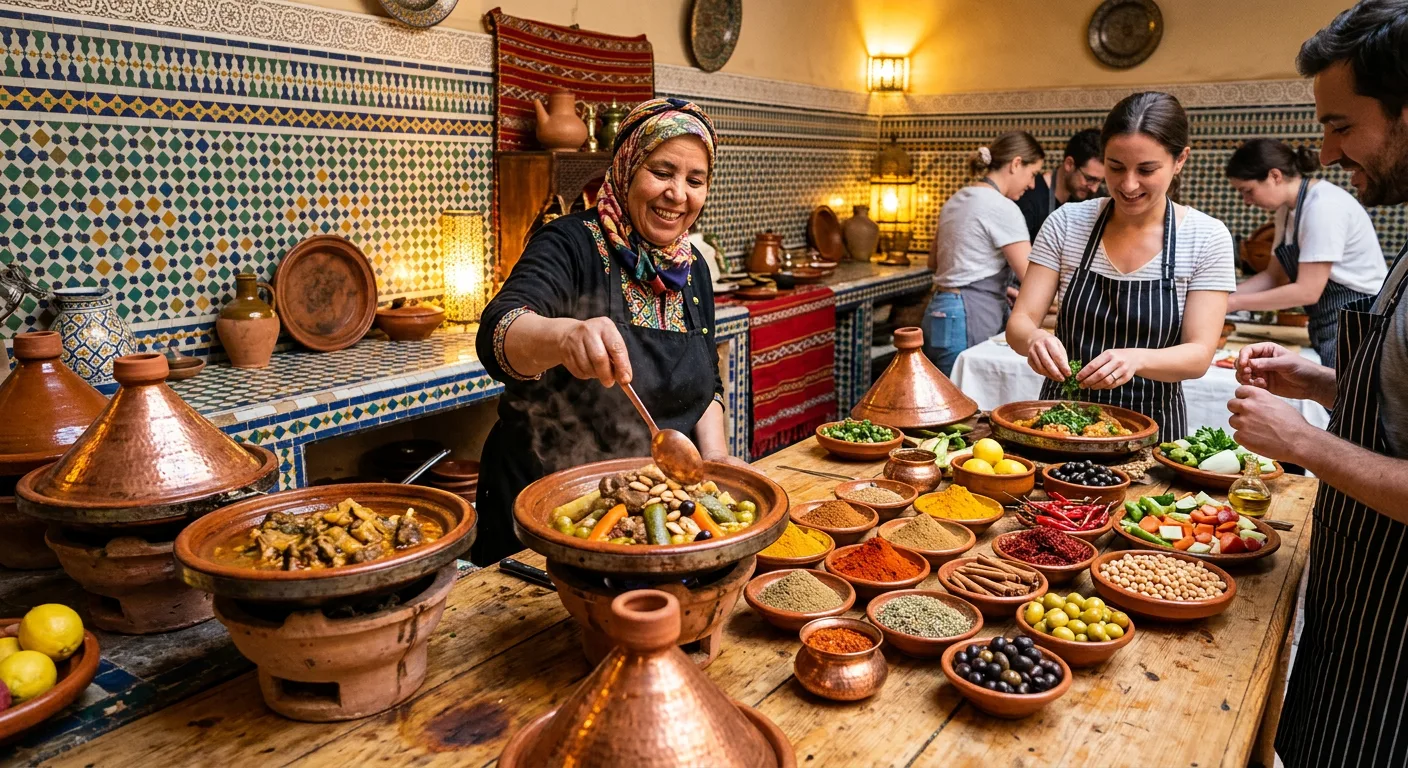
Every visitor to Morocco hears about the tagine within the first day. The conical pot, the slow-braised meat, the perfume of saffron and preserved lemon — it is the dish everyone knows and a genuine pleasure. But treating the tagine as the entirety of Moroccan cuisine is like going to Japan and eating only ramen. Here, in the south, is what the rest looks like.
The tagine, properly understood
A tagine is more than a recipe — it is a way of cooking and of sharing. Meat or vegetables are braised slowly in the heavy clay pot whose lid traps the steam, with spices, and often with preserved lemon and olives, or prunes and almonds. It arrives at the table in the pot itself and is eaten communally, scooped up with bread. To share a tagine in a Berber home or a desert camp is to be honoured.
The best tagine is rarely in a tourist restaurant. Ask your guide to take you to a kasbah kitchen or a family home, or arrange through us a cooking experience where you learn to make it yourself.
Couscous and the everyday table
If the tagine is the centrepiece, the everyday glory of southern eating is broader. There is couscous — hand-rolled semolina steamed over a broth of seven vegetables, traditionally the Friday dish; the Berber omelette, eggs cooked into a tomato-and-onion tagine; bright salads of zaalouk and taktouka; lentils, harira soup, and always warm bread, olives and tea. Order a spread and share; this is how the south eats, slowly and together.
The desert tanjia and mechoui — dinner over fire
For celebration food, the south reaches for slow fire. A tanjia — meat sealed in a clay urn and cooked for hours in embers — emerges meltingly tender and faintly smoky. A mechoui, whole lamb slow-roasted until it falls from the bone, is the great feast. In a desert camp under the dunes, a meal lifted from the coals at dusk is one of the most memorable dinners Morocco offers — communal, unhurried and quietly theatrical.
Grills and snacks worth stopping for
Ouarzazate's Avenue Mohammed V is the best casual-eating theatre in the area. Brochettes (skewers) grilled to order over charcoal, kefta, a bowl of harira and freshly fried msemen are the standards — cheap, fresh and excellent. Finish with a glass of mint tea, poured from a height into small glasses, the punctuation mark of every southern meal.
On the road, look for amlou — the almond, argan and honey paste eaten on warm bread at breakfast — and the Draa Valley dates that sweeten the end of any meal.
Vegetarian and vegan eating in the south
The south is one of the easier places to eat plant-based, thanks to its tradition of vegetable cookery. Vegetable tagine, the Berber omelette, zaalouk, taktouka, lentils, couscous with seven vegetables and a mountain of warm bread make a satisfying meal with no meat at all. Vegans should ask about smen (aged butter) and meat stock, which appear in some cooked dishes. Most kitchens accommodate dietary requests readily.
Cooking classes and kasbah kitchens
A half-day cooking class is one of the best single experiences the south offers. The format we prefer begins by sourcing ingredients, then a session in a kasbah kitchen or a Berber family home — learning to roll couscous, build a tagine and bake bread over a wood fire. You eat what you make, and your money supports local cooks. We include this in our cultural tours and can arrange it as a standalone for guests travelling independently.
What to drink
Morocco is a Muslim country; alcohol is available in some hotels and licensed restaurants but not everywhere in the south. The default is sweet green tea with fresh mint (atay), poured ceremonially as a gesture of welcome, and coffee, often spiced. Fresh orange and pomegranate juices are everywhere in season. Tap water is treated but most visitors drink filtered or bottled water throughout the south.
Frequently asked
Is Moroccan food spicy?
Moroccan cuisine is fragrant rather than fiery. Cumin, ginger, saffron, cinnamon, turmeric and the ras el hanout blend are the dominant notes. Chilli is rarely built into a dish; a side of harissa is offered if you want heat. Guests with low spice tolerance almost never have an issue.
What is a tagine and how do you eat it?
A tagine is both the conical clay pot and the slow-cooked stew made in it — meat or vegetables braised gently with spices, often with preserved lemon and olives, or prunes and almonds. It is brought to the table in the pot and eaten communally, scooped up with bread rather than a fork. In a Berber home or a desert camp, sharing a tagine is a real mark of hospitality.
What should vegetarians and vegans order in Morocco?
The south is good for plant-based eating. Vegetable tagine, the Berber omelette, zaalouk (smoky aubergine), taktouka (peppers and tomato), lentils, couscous with seven vegetables, and plenty of bread, olives and salads make a generous meal with no meat. Vegans should ask about smen (aged butter) and meat stock, which appear in some cooked dishes.
What are the best things to try around Ouarzazate?
Start with a lamb-and-prune or chicken-and-lemon tagine and a Berber omelette. Seek out couscous on a Friday, harira soup, fresh-baked khobz, and amlou (almond, argan and honey paste) at breakfast. For a special occasion, a slow-roast mechoui or a desert tanjia is unforgettable. Finish with dates from the Draa Valley and mint tea.
Can you do a cooking class around Ouarzazate?
Yes, and we recommend it as one of the best half-days of any southern trip. A good class takes you to source ingredients, then into a kasbah kitchen or a Berber family home to make a tagine and bread from scratch — often over a wood fire. You eat what you make, and your money supports local cooks. We include this option in several cultural itineraries.
Is tap water safe to drink around Ouarzazate?
Tap water is treated and generally considered safe in town, but most visitors in the south drink filtered or bottled water, especially in rural areas and the desert. Restaurants use treated water for cooking without issue. Ice in established restaurants is fine; be more cautious at very casual roadside stops.
Eat well in the south
We'll build a culinary thread through your itinerary.
From a Ouarzazate grill walk to a kasbah cooking class and a tanjia in a desert camp, Ouarzazate & Aït Ben Haddou Tours weaves the best of southern food into every programme — including dietary accommodations arranged in advance.
Enquire about a culinary itinerary